
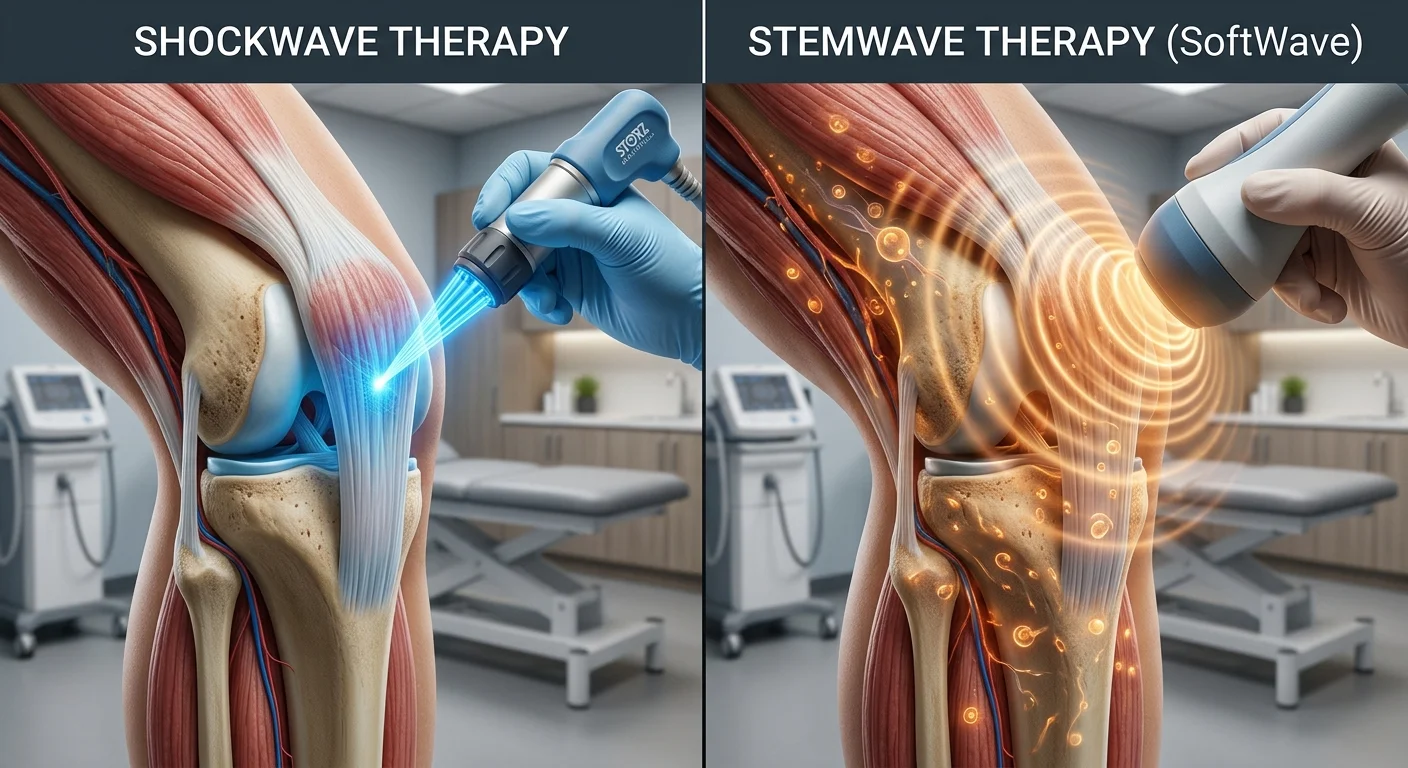
Deep-seated musculoskeletal lesions, chronic joint degeneration, and deep ligament injuries require deep energy penetration. For these issues, clinical evidence favors StemWave therapy. Its focused electrohydraulic shockwaves reach depths up to 10 centimeters. Conversely, superficial tendon pathologies, large-muscle myofascial trigger points, and surface-level soft tissue issues respond best to traditional radial shockwave therapy. Both modalities utilize acoustic energy to initiate tissue repair. However, they differ fundamentally in wave generation, depth of penetration, and cellular activation pathways. Selecting the correct technology prevents unnecessary tissue trauma. It also optimizes patient recovery timelines. Medical practitioners must assess the precise anatomical depth and nature of the target lesion. They must do this before prescribing either protocol. A misapplied radial wave can cause surface bruising without reaching a deep joint issue. Meanwhile, a focused wave may bypass superficial fascia where a muscle knot resides. Patients requiring deep cellular regeneration should seek focused acoustic treatments. Those with broad, superficial muscular pain benefit more from radial pressure waves.
Disclaimer: This educational content does not substitute for professional medical advice, diagnosis, or treatment. Always consult a qualified healthcare provider or a professional pain management clinic with questions regarding your condition.
Understanding Acoustic Wave Technologies in Pain Medicine
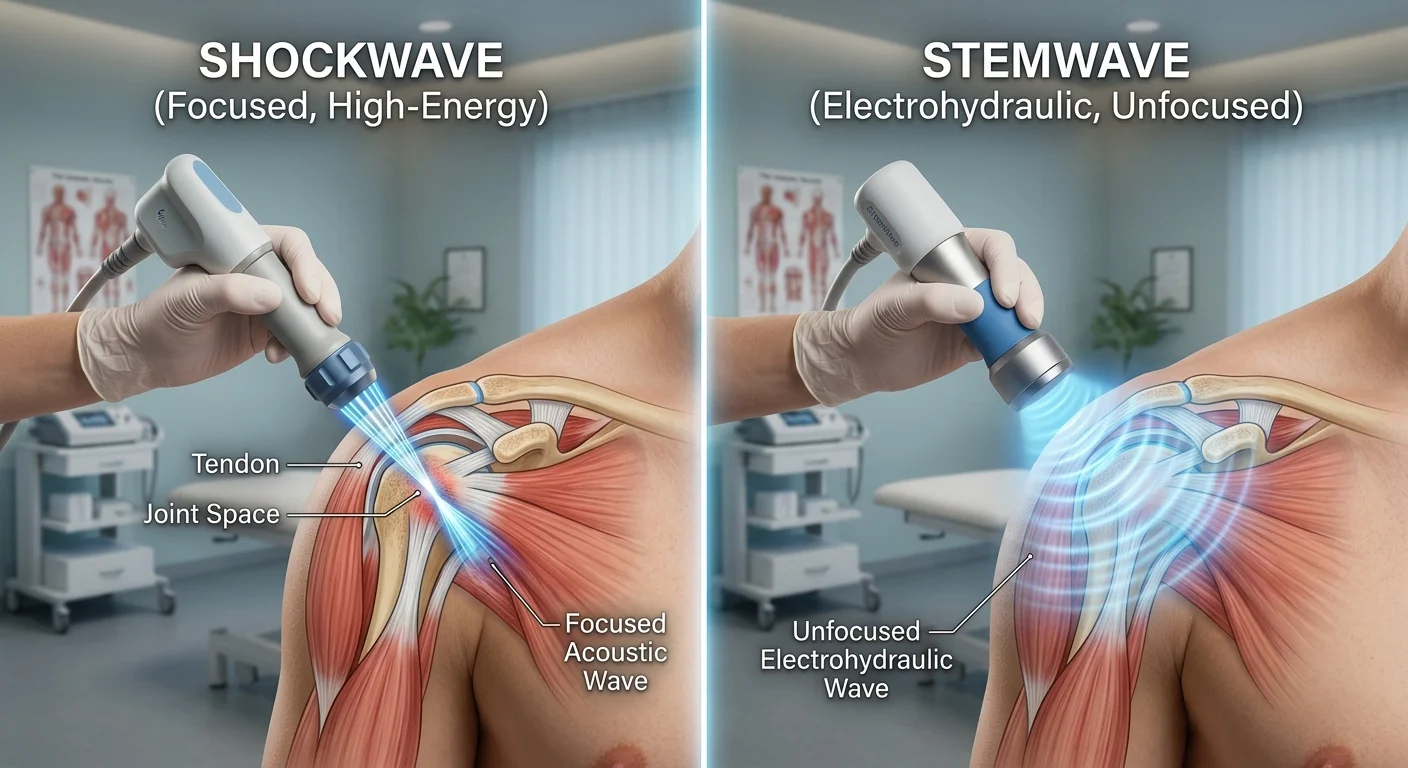
Acoustic wave technology utilizes mechanical energy to stimulate tissue regeneration. It began in the late twentieth century as lithotripsy to break down kidney stones. Physicians quickly noted that lower energy levels stimulated tissue healing. They did not destroy the tissue. Modern medicine utilizes these pressure waves to treat chronic inflammation, degenerative tendons, and bone non-unions. When the wave enters the body, it creates shear stress on cell membranes. This physical stimulus initiates a process called mechanotransduction. Cells convert physical forces into chemical signals. This conversion accelerates the repair of soft tissue. Modern clinics utilize different machines to deliver this energy.
The primary methods include radial waves and focused electrohydraulic waves. Both systems aim to alleviate chronic pain. They restore physical mobility without invasive surgeries. Clinical research shows these acoustic impulses stimulate cellular activity. They recruit growth factors. They also increase microcirculation to poorly vascularized areas. This makes acoustic therapy a primary modality in modern sports medicine and orthopedics. For a deeper look into traditional acoustic options, understanding what is shockwave therapy and how can it help provides valuable foundational context.
Is Stemwave the Same as Shockwave? Essential Engineering Differences
No, Stemwave is not identical to traditional radial shockwave therapy. Both belong to the acoustic wave family, but their engineering differs. Traditional shockwave systems usually generate radial pressure waves. These devices use a compressed air cartridge to launch a projectile inside a handpiece. This projectile hits an applicator. It sends a spreading wave into the superficial tissues. The energy peaks at the skin surface. It diffuses rapidly as it travels deeper into the body.
Conversely, Stemwave utilizes electrohydraulic technology to generate true shockwaves. An electrical spark in a fluid-filled chamber creates a pressure wave. This wave focuses deep within the tissue. The acoustic wave enters the body without losing energy at the skin surface. It reaches its maximum intensity at a precise focal point inside the targeted tissue. This engineering distinction means Stemwave penetrates deeper. It operates with greater precision than traditional radial devices.
This difference is crucial when treating deep structural issues. These issues include hip joints or deep spinal ligaments. While radial shockwaves scatter energy over a wide, shallow area, Stemwave concentrates energy. It focuses deep within a small, targeted zone. Consequently, Stemwave avoids the surface-level discomfort of high-energy radial treatments. For patients exploring these modalities, understanding what conditions can Stemwave therapy treat helps clarify why depth of penetration is so critical.
Key Distinctions in Shockwave vs Stemwave Clinical Applications
The clinical applications for shockwave and Stemwave diverge based on tissue depth. Radial shockwave therapy excels in treating superficial structures. It is ideal for broad muscle groups and superficial tendons. Practitioners frequently apply it to conditions like Achilles tendonitis, tennis elbow, and superficial plantar fasciitis. Because the energy spreads outward, it covers large surface areas efficiently.
In contrast, Stemwave therapy targets deep joint spaces, intra-articular pathologies, and chronic ligamentous tears. It is highly effective for deep knee osteoarthritis, hip labral tears, and deep rotator cuff lesions. The focused electrohydraulic waves bypass the outer skin layers. They act directly on injured deep tissues. A clinical study published by the National Center for Biotechnology Information demonstrates that focused acoustic waves achieve up to an 85% success rate for chronic musculoskeletal pathologies. Choosing the correct device ensures the acoustic energy reaches the exact anatomical site of the lesion.
If a patient receives radial therapy for a deep hip joint issue, the energy dissipates too early. It fails to reach the joint capsule. Conversely, utilizing a highly focused wave on a broad superficial muscle strain is inefficient. Clinicians must align the technology with the specific anatomical depth of the injury.
| Feature | Traditional Radial Shockwave | Stemwave (Focused Electrohydraulic) |
|---|---|---|
| Wave Characteristics | Radial pressure waves (diverging) | Focused electrohydraulic shockwaves (converging) |
| Penetration Depth | Superficial (typically 3 to 4 centimeters) | Deep (up to 10 centimeters / 4 inches) |
| Biological Mechanism | Controlled micro-trauma and inflammatory response | Acoustic shearing and endogenous stem cell recruitment |
| Primary Target Tissue | Superficial muscles, tendons, fascia | Deep joint capsules, ligaments, cartilage, bone |
| Sensation Level | Intense localized tapping on skin | Deep rhythmic pulsing, highly tolerated |
Biological Mechanisms of Stem Wave Therapy vs Shock Wave Therapy
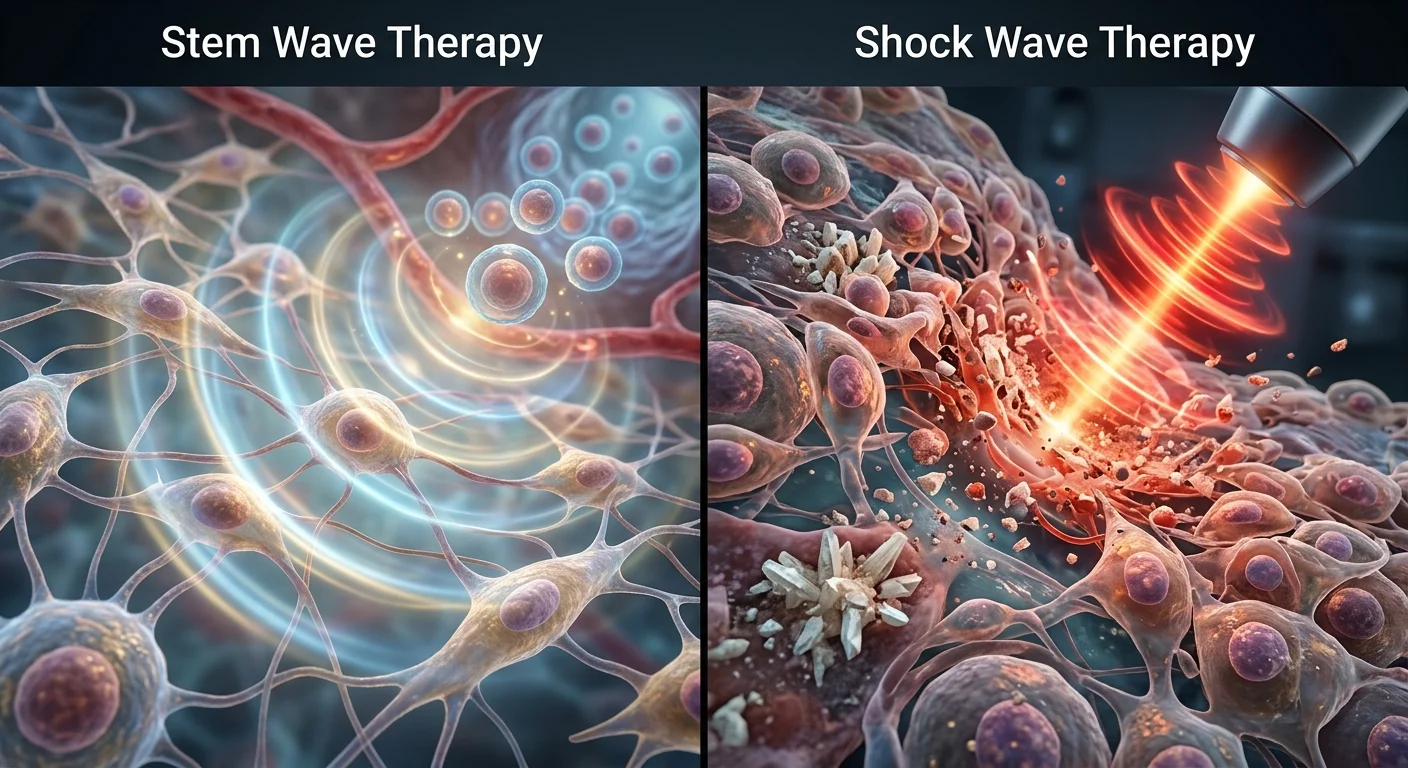
The biological mechanism of stem wave therapy vs shock wave therapy differs in intensity and depth. Traditional radial shockwaves trigger localized micro-trauma in superficial tissues. This micro-trauma stimulates a standard inflammatory healing cascade. It brings new blood flow and collagen to the area. However, Stemwave’s electrohydraulic waves create a different cellular phenomenon. This phenomenon is known as acoustic shearing.
This precise mechanical force mimics the signaling environment that recruits endogenous stem cells. Research in the Journal of Orthopaedic Surgery and Research indicates that focused acoustic waves stimulate a 300% increase in localized nitric oxide production. This molecule dilates blood vessels and drives cellular repair. This process triggers the release of vascular endothelial growth factors. It also activates local progenitor cells. These progenitor cells migrate to the injured area to rebuild damaged tissue.
Thus, traditional shockwave relies on controlled mechanical irritation. Stemwave directly activates the body’s regenerative pathways at a cellular level. Furthermore, this cellular activation occurs without causing structural micro-trauma to surrounding tissue. This makes Stemwave an excellent choice for delicate joint structures. It benefits chronic degenerative conditions where additional tissue damage must be avoided. The treatment stimulates rapid healing without the prolonged soreness of older radial shockwave systems.
Treatment Protocols, Comfort Levels, and Expected Recovery
A typical treatment course for both therapies involves a series of brief office visits. Patients undergoing traditional radial shockwave therapy usually require five to eight sessions. These sessions are spaced one week apart. The treatment can feel like a rapid, intense tapping on the skin. This can cause mild localized discomfort. After a radial session, patients may experience minor skin redness or swelling. They may feel localized soreness for twenty-four to forty-eight hours.
Conversely, Stemwave protocols are generally shorter. They typically require only four to six sessions. The electrohydraulic wave creates a rhythmic pulsing or deep tingling sensation. It does not feel like a sharp surface hit. Patients find Stemwave highly tolerable, even when treating sensitive joints. Recovery after Stemwave is immediate. It requires no downtime or restriction of daily activities.
In fact, according to clinical data registry trials hosted on ClinicalTrials.gov, over 80% of patients report significant functional mobility improvement within four sessions of focused electrohydraulic therapy. This rapid response allows athletes to maintain training schedules. It prevents long-term interruptions to daily routines.
Let us outline the typical patient journey during a treatment protocol:
- Initial diagnostic mapping to locate the precise pain triggers.
- Application of a conductive coupling gel to ensure optimal acoustic wave transmission.
- Delivery of targeted acoustic pulses to the affected anatomical zone.
- Post-treatment evaluation of immediate mobility improvements and pain reduction.
- Development of a customized active rehabilitation plan to support ongoing tissue healing.
This structured approach ensures that mechanical stimulation translates into lasting functional recovery.
Painless Medical Practice in Chicago is a premier pain management clinic that offers the StemWave and shockwave therapy services discussed in this article.
Common Professional Mistakes to Avoid in Acoustic Therapy Selection
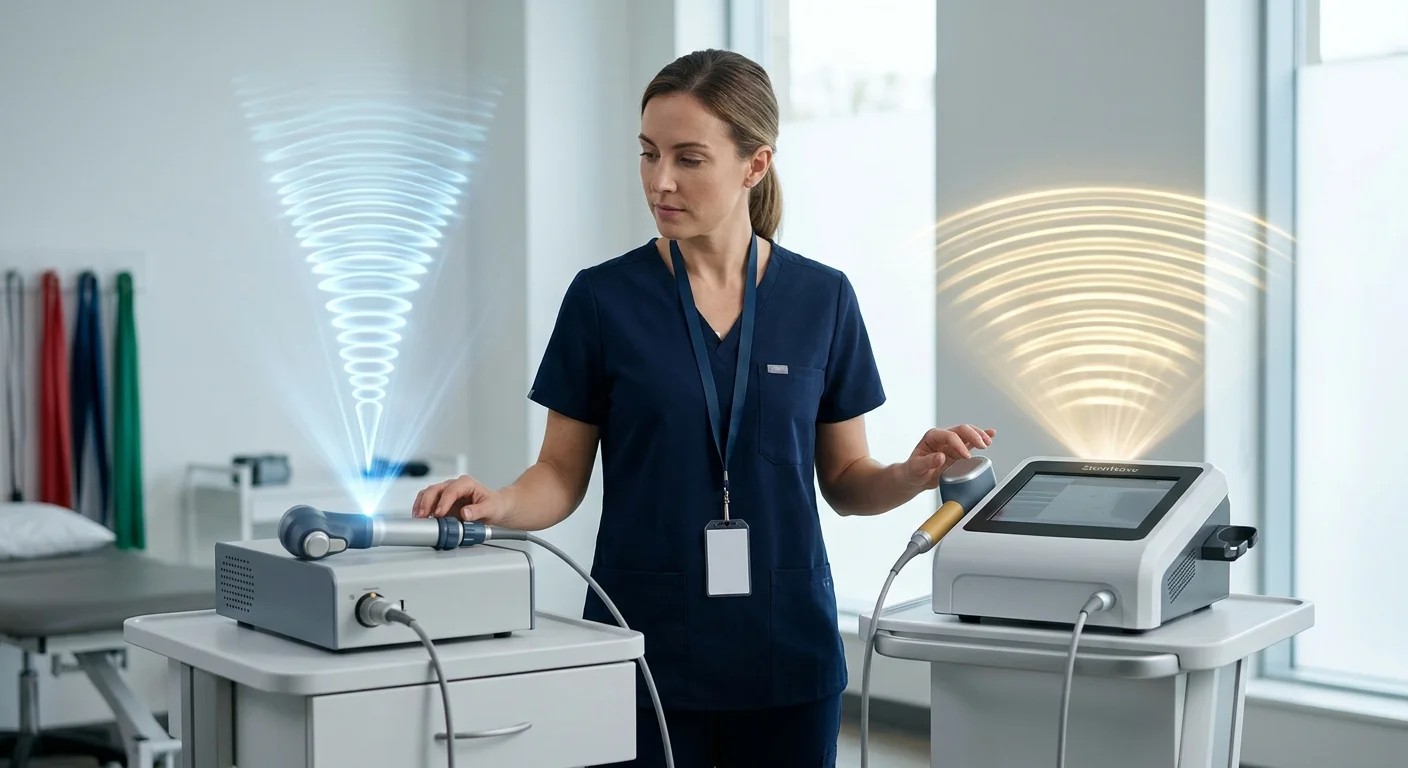
Confusing radial pressure waves with true focused shockwaves is a common mistake. It occurs among both clinical providers and patients. Many practitioners purchase lower-cost radial devices. They then market them as focused shockwave or Stemwave systems. This leads to poor clinical outcomes. Radial waves cannot reach the necessary depth to treat deep joint pathologies. Another significant professional error is the improper management of patient activity post-treatment.
Acoustic therapies temporarily anesthetize local nerve fibers. Consequently, patients often feel immediate pain relief. If a clinician fails to advise rest, the patient may overuse the injured limb. This can worsen the underlying tear or inflammation. Practitioners must also avoid utilizing high-intensity settings too quickly. Starting with excessive energy can cause muscle guarding. This guarding prevents the acoustic waves from penetrating deeply. A graduated approach yields far better long-term regenerative results.
Clinicians should start with a lower energy flux density. They can increase it as tissue tolerance improves. Finally, failing to combine acoustic therapy with active physical rehabilitation limits the duration of benefits. To achieve permanent recovery, newly regenerated tissue must be progressively loaded. Relying solely on the machine is a major clinical oversight. It often results in injury recurrence.
Frequently Asked Questions (FAQ)
Is Stemwave the same as shockwave?
No, Stemwave is a specific, advanced subtype of shockwave therapy. It uses focused electrohydraulic acoustic waves to penetrate deep tissues. Traditional systems utilize radial pressure waves that scatter energy closer to the skin surface.
Which therapy is better for chronic knee pain?
Stemwave is generally superior for chronic knee pain because its focused waves penetrate up to four inches. This allows it to target cartilage, deep ligaments, and joint inflammation that radial shockwaves cannot reach.
How many sessions of Stemwave therapy are typically required?
Most patients require four to six weekly sessions of Stemwave therapy to achieve optimal regenerative results. Severe or chronic joint conditions may require periodic maintenance sessions based on clinical response.
Can you perform physical activity immediately after shockwave or Stemwave treatment?
Yes, patients can perform light daily activities immediately, but high-impact exercise should be avoided for forty-eight hours. This temporary rest protects the treated tissues as they initiate the healing cascade.
What are the primary side effects of these acoustic treatments?
The side effects are minimal and include temporary skin redness, mild localized swelling, or slight aching. These symptoms represent normal signs of cellular activation and typically resolve within forty-eight hours.
When will I begin to notice results from Stemwave therapy?
Many patients notice an immediate reduction in pain shortly after their first session due to nerve desensitization. The true regenerative benefits and tissue healing develop over a period of three to twelve weeks.