
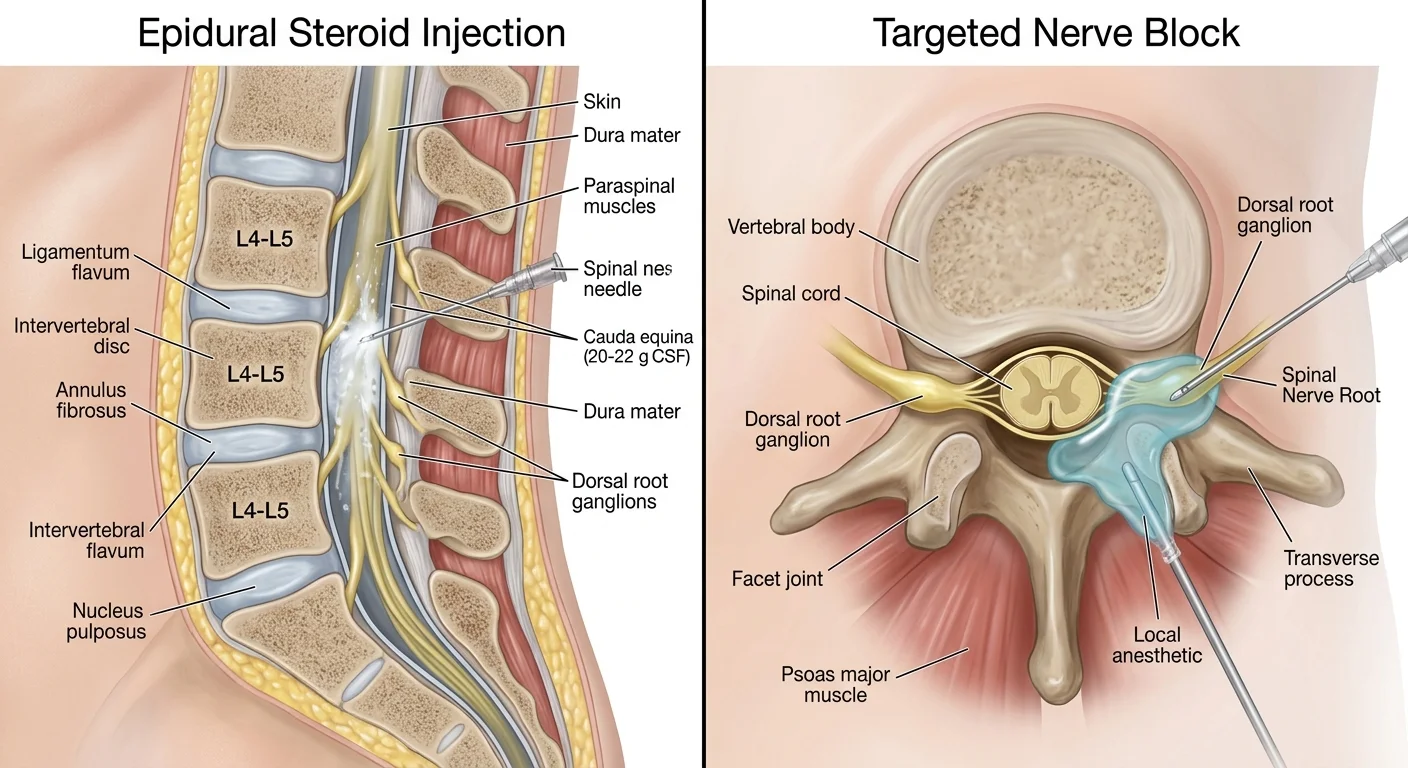
For patients presenting with radicular pain secondary to spinal nerve root compression, herniated discs, or spinal stenosis, an epidural steroid injection is the primary targeted treatment. For patients suffering from localized joint pain, peripheral neuralgia, complex regional pain syndromes, or those requiring precise isolation of a specific pain generator before radiofrequency ablation, a targeted nerve block is the preferred clinical path. Epidural steroid injections function by bathing the epidural space with high-potency corticosteroids to suppress neurogenic inflammation around compressed spinal nerve roots. Targeted nerve blocks work by administering local anesthetics directly adjacent to a specific peripheral, autonomic, or medial branch nerve to temporarily halt nociceptive signaling. Although interventional pain specialists often mix local anesthetics and corticosteroids in both interventions, the two procedures differ fundamentally in anatomical target, physiological mechanism, and diagnostic purpose. Correct clinical selection depends on correlating your neurological examination, subjective pain distribution, and magnetic resonance imaging (MRI) findings.
Anatomical Targets and Pharmacological Mechanisms
Epidural injections deliver medication into the spinal epidural space to target inflamed spinal nerve roots, whereas nerve blocks deliver medication directly adjacent to a distinct peripheral or autonomic nerve. The epidural space lies between the dura mater and the ligamentum flavum, extending from the base of the skull down to the sacrum. When a herniated disc or osteophyte compresses a nerve root within this space, phospholipase A2 activity increases, producing intense chemical irritation and radicular pain along the affected dermatome. Delivering corticosteroids into the epidural space inhibits inflammatory cascades, reduces vascular permeability, and decreases tissue swelling surrounding the compressed neural structures.
Targeted nerve blocks focus on discrete peripheral nerves, medial branches supplying the facet joints, or sympathetic ganglia outside the epidural canal. Rather than diffusing medication across a broad anatomical space, the interventional physician positions a needle immediately perineural to the identified structure. Highlighting this distinction, clinical trials recorded in The Spine Journal demonstrate that precise image-guided epidural steroid injections reduce radicular leg pain in over 70% of patients with acute lumbar disc herniations by suppressing local inflammatory cytokines.
The pharmacological agents utilized in these two interventional procedures serve complementary physiological roles:
- Corticosteroids: Synthetic anti-inflammatory compounds such as dexamethasone, triamcinolone, or methylprednisolone that inhibit prostaglandin synthesis and calm hyper-excitable nerve fibers.
- Local Anesthetics: Membrane-stabilizing agents like lidocaine, bupivacaine, or ropivacaine that block voltage-gated sodium channels, preventing nerve action potentials from transmitting pain signals to the brain.
- Steroids in Epidural Injections: Act as the primary therapeutic drug to deliver multi-month anti-inflammatory relief across inflamed nerve roots.
- Anesthetics in Nerve Blocks: Serve as the main diagnostic agent to rapidly extinguish pain signals, confirming whether that specific nerve is the true pain generator.
Is a Nerve Block the Same as a Steroid Injection?
A nerve block is not the same as a steroid injection, although interventional physicians frequently blend local anesthetics with corticosteroids within both types of injections. The phrase “nerve block” describes a functional objective: interrupting the transmission of electrical pain signals along a defined neural pathway. The phrase “steroid injection” describes the administration of anti-inflammatory corticosteroid medication to relieve swollen, irritated tissues.
A patient may receive a pure nerve block containing only a fast-acting local anesthetic to test whether a specific spinal joint or peripheral nerve is causing their pain. Conversely, a patient may receive a steroid injection directly into an inflamed bursa, joint capsule, or epidural space to control localized swelling without aiming to numb an isolated nerve trunk.
Understanding this distinction prevents unnecessary treatments. Confusing a diagnostic block with a therapeutic steroid injection leads patients to expect long-term relief from an injection intended only as a short-term diagnostic test. When you visit a specialized pain management clinic, your provider will explain whether your scheduled injection is meant to diagnose the pain source or provide lasting inflammation control.
Comparing Indications: Clinical Applications for Each Procedure
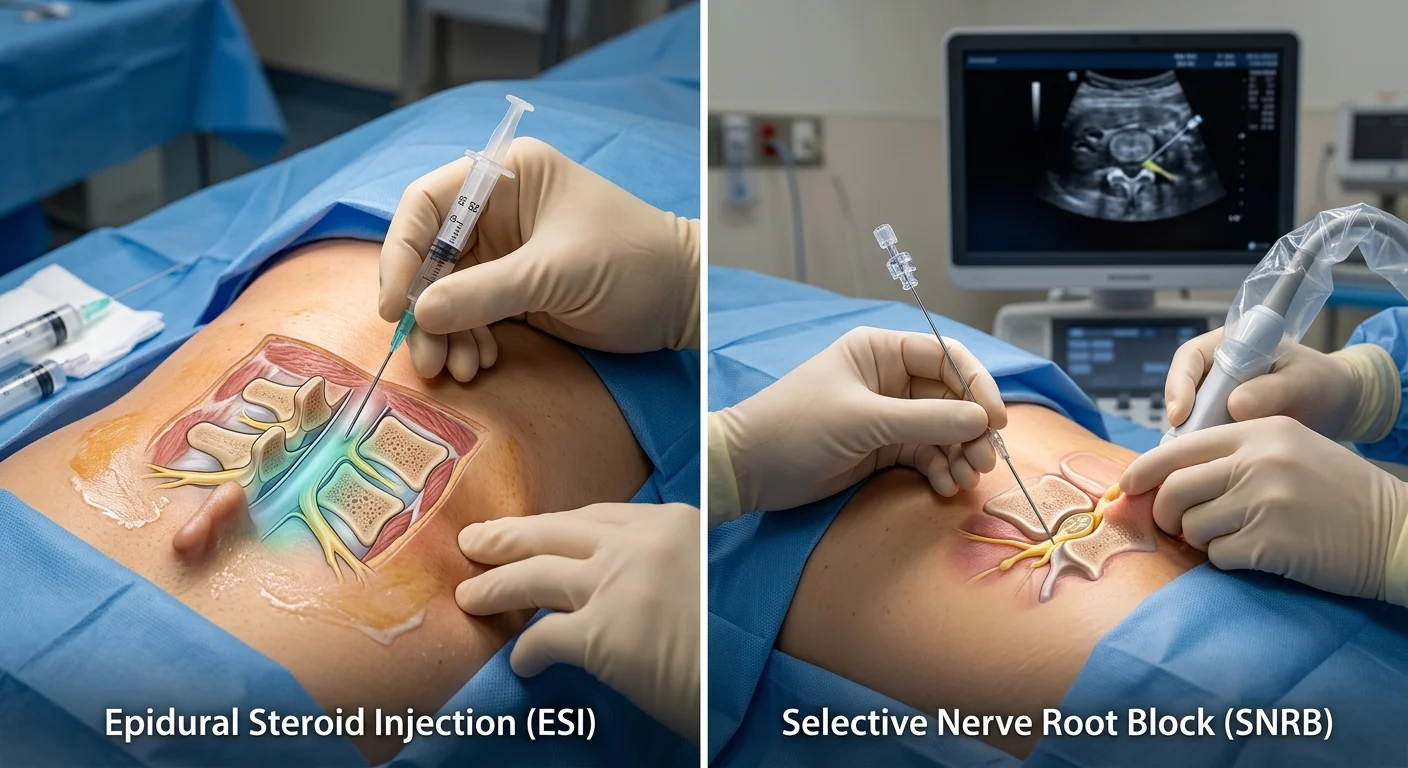
Clinical indication depends entirely on whether your primary pain generator stems from diffuse spinal nerve root inflammation or localized structural and peripheral nerve irritation. Interventional specialists select epidural steroid injections when pain radiates along a peripheral nerve path due to mechanical compression or chemical irritation inside the spinal canal. Transforaminal, interlaminar, or caudal epidural routes allow the corticosteroid solution to coat multiple nerve roots simultaneously.
Nerve blocks are indicated when pain originates from localized skeletal structures, peripheral entrapment neuropathies, or autonomic nervous system dysfunction. For instance, facet joint arthropathy causes localized axial back pain that does not follow a classic dermatomal pattern into the leg. In these cases, targeting the medial branch nerves that innervate the affected facet joints provides superior anatomical specificity compared to an epidural injection. To learn more about selecting between spinal therapies, review our detailed guide on facet joint injections versus epidural injections.
Common clinical indications for epidural injections include:
- Lumbar, thoracic, or cervical disc herniations causing radiculopathy.
- Central canal or neuroforaminal spinal stenosis.
- Spondylolisthesis with mechanical nerve compression.
- Post-surgical epidural fibrosis with chronic radicular irritation.
Common clinical indications for targeted nerve blocks include:
- Facet joint syndrome treated via medial branch blocks.
- Chronic headaches treated via occipital nerve blocks.
- Complex regional pain syndrome (CRPS) treated via stellate ganglion or lumbar sympathetic blocks.
- Peripheral entrapments, such as intercostal neuralgia or meralgia paresthetica.
Comparison Summary: Nerve Block vs Epidural Steroid Injection
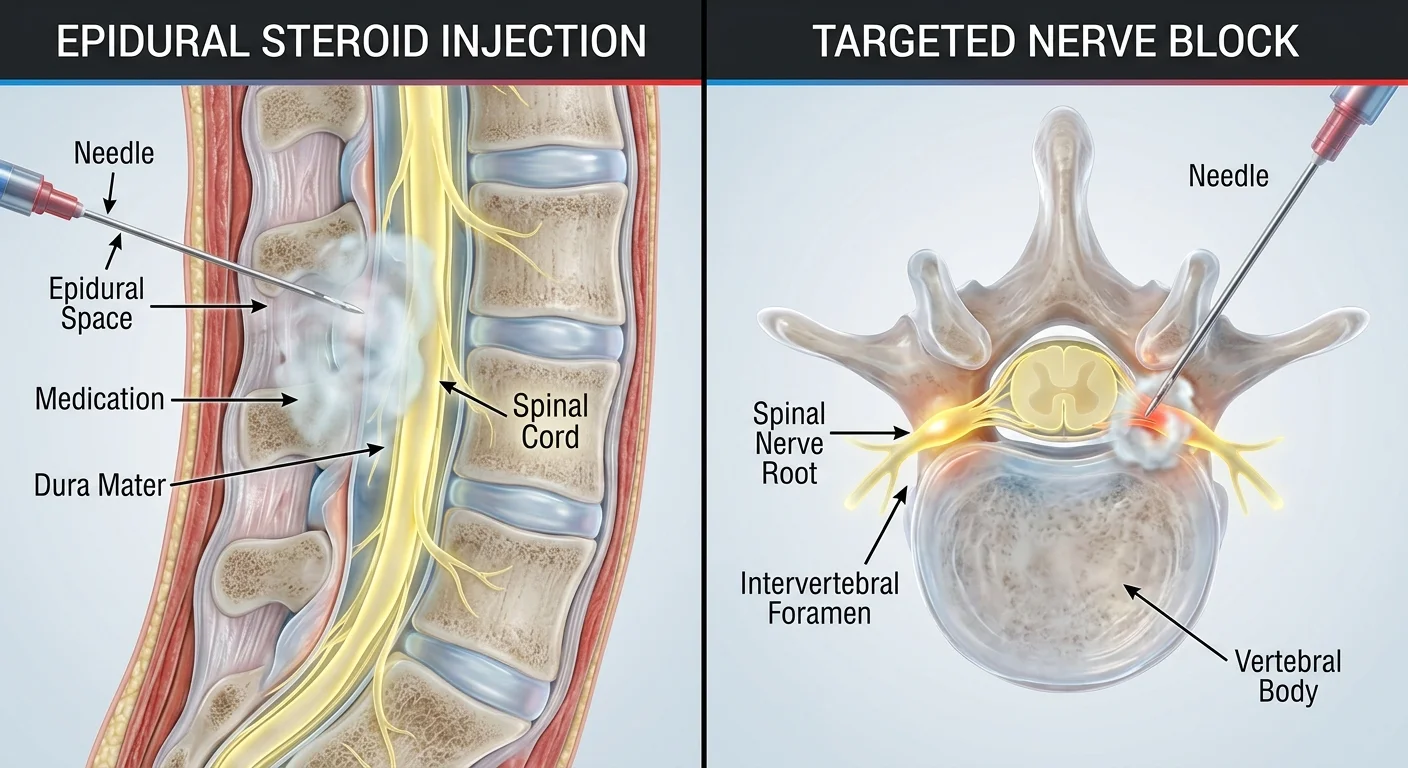
Selecting between an epidural steroid injection and a nerve block requires evaluating primary targets, active drugs, diagnostic capabilities, and long-term treatment objectives. The following comparison table outlines these core functional differences.
| Clinical Feature | Epidural Steroid Injection | Targeted Nerve Block |
|---|---|---|
| Anatomical Target | Epidural space surrounding spinal dural sac and nerve roots | Perineural space adjacent to a specific nerve or plexus |
| Primary Mechanism | Suppression of neurogenic inflammation via corticosteroid deposition | Interruption of nerve signal conduction via sodium channel blockade |
| Diagnostic Utility | Secondary; evaluated by functional pain reduction over weeks | Primary; evaluated by immediate percentage of pain relief within hours |
| Therapeutic Objective | Medium- to long-term pain relief and improved physical therapy tolerance | Immediate diagnostic validation or short-term pain relief |
| Typical Duration | Several weeks to many months | Several hours (diagnostic) to several weeks (if combined with steroid) |
| Next Step if Successful | Rehabilitation, physical therapy, and repeated injection as needed | Radiofrequency ablation, neurostimulation, or surgical consultation |
Step-by-Step Clinical Procedure Protocol
Both epidural injections and nerve blocks follow standardized interventional protocols involving live fluoroscopic or ultrasound guidance to guarantee needle positioning and patient safety.
- Pre-Procedure Preparation and Positioning: You are positioned prone or lateral on a specialized fluoroscopy table. Clinical staff apply monitoring equipment to track vital signs throughout the procedure.
- Antiseptic Preparation and Local Anesthesia: The physician cleans the skin overlying the target area with chlorhexidine or betadine. A local anesthetic is injected into the subcutaneous tissue to numb the needle entry path.
- Image-Guided Needle Advancement: Using real-time fluoroscopy (X-ray guidance) or high-resolution ultrasound, the interventional physician advances a spinal needle directly into the epidural space or adjacent to the target nerve pathway.
- Contrast Medium Verification: Prior to injecting medication, a small volume of non-ionic radiopaque contrast dye is administered under live motion imaging (digital subtraction angiography). This crucial step confirms correct drug spread and rules out inadvertent intravascular or intrathecal needle placement.
- Medication Administration and Recovery: The physician slowly injects the selected therapeutic solution. The needle is withdrawn, a sterile dressing is applied, and you are transferred to a post-procedure area for 15 to 30 minutes of clinical observation.
Nerve Block vs Steroid Injection for Back Pain and Sciatica
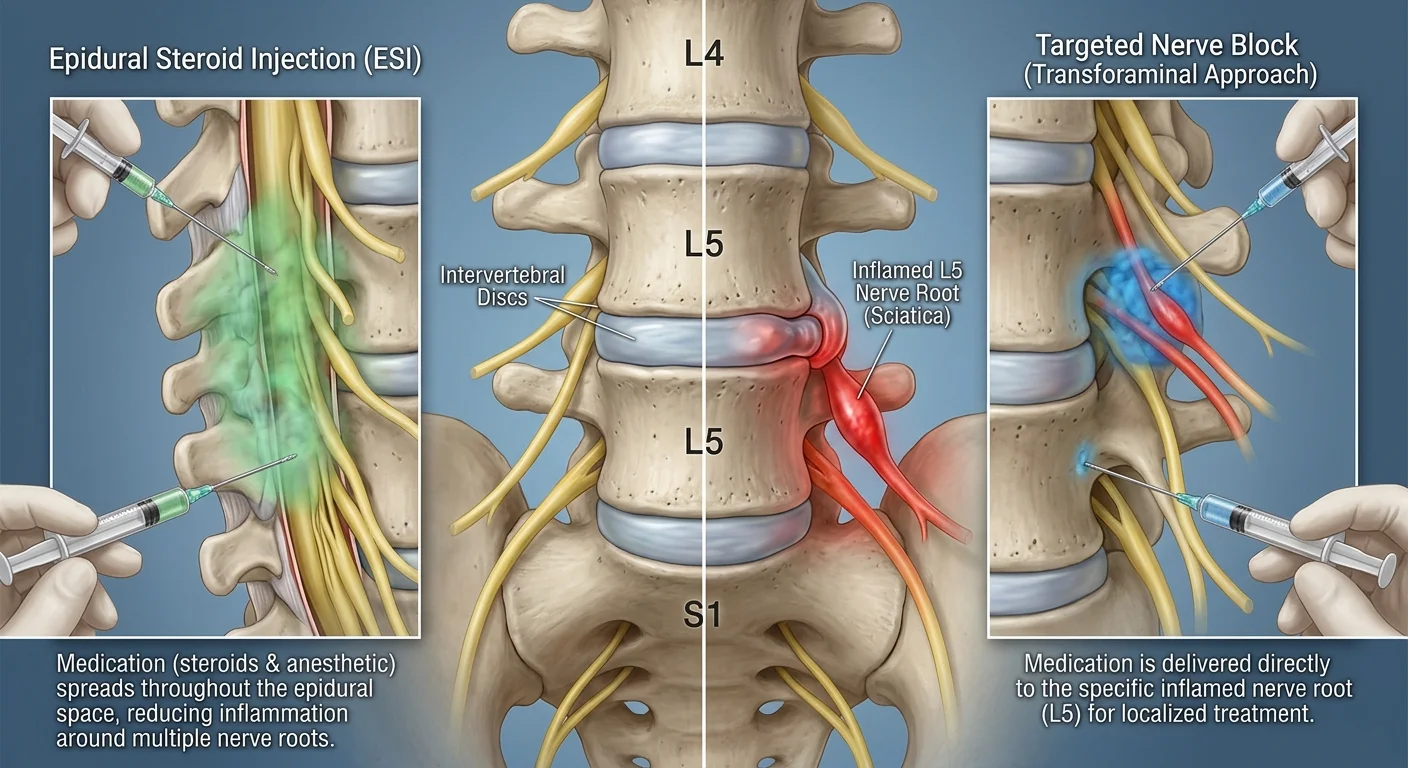
For true sciatica caused by nerve root compression in the lumbar spine, an epidural injection delivers superior therapeutic relief compared to a localized nerve block. Sciatica represents a radicular syndrome where mechanical nerve compression triggers ectopic axonal firing. Bathing the irritated spinal nerve root within the epidural space halts the local cascade of inflammatory enzymes. Data compiled by the National Center for Biotechnology Information demonstrates that fluoroscopic transforaminal epidural injections yield significant functional improvement for 65% to 80% of patients suffering from acute disc-related radiculopathy.
Conversely, if back pain is axial—meaning localized to the lower back without radiating down the leg—an epidural steroid injection often yields disappointing results. Axial back pain frequently arises from arthritic facet joints rather than compressed spinal nerve roots. In this diagnostic scenario, performing a targeted medial branch nerve block yields far more clinically useful information.
An interventional clinical pitfall to avoid is performing repeated epidural injections for axial back pain without confirming the actual pain generator. If two consecutive epidural injections fail to relieve localized spine pain, clinicians should pause and pivot. Treating facet joint arthropathy with repeated epidural injections wastes valuable rehabilitation time. The clinician should instead perform dual diagnostic medial branch blocks to evaluate candidate facet joints for subsequent radiofrequency ablation.
Diagnostic Protocols, Relief Duration, and Safety Considerations
Nerve blocks yield immediate pain interruption lasting hours to days for diagnostic mapping, whereas epidural steroid injections take two to seven days to reduce inflammation but provide relief lasting several months. Diagnostic nerve blocks serve as a critical gatekeeper in interventional pain medicine. By measuring your pain score immediately before and for several hours after a local anesthetic block, physicians calculate the exact percentage of pain reduction.
According to interventional pain guidelines, requiring at least 80% comparative pain relief across two separate diagnostic nerve blocks reduces diagnostic false-positive rates from 38% to under 5%. This high diagnostic accuracy confirms whether a patient is a suitable candidate for longer-lasting neurotomy procedures.
Both procedures demonstrate high safety profiles when performed by experienced, board-certified specialists using image guidance. Potential risks are generally mild and temporary:
- Transient post-injection soreness at the entry site.
- Temporary facial flushing, fluid retention, or mild blood glucose elevation from systemic corticosteroid absorption.
- Transient motor weakness or numbness in the limb, which resolves as the local anesthetic wears off.
- Rare complications, such as dural puncture headache, localized infection, or minor bleeding.
Patients taking anticoagulant medications must follow specific hold times under the supervision of their prescribing physician prior to receiving neuraxial or deep nerve blocks to eliminate spinal hematoma risks.
This educational material is provided strictly for informational purposes and does not constitute formal medical advice, diagnosis, or treatment plans. You should always consult a qualified healthcare provider regarding any specific medical condition or interventional procedure.
Painless Medical Practice in Chicago offers epidural steroid injections, nerve blocks, and comprehensive interventional pain protocols tailored to your unique anatomical needs.
FAQs About Epidural Steroid Injection vs Nerve Block
What is the main difference between a nerve block and an epidural injection?
An epidural steroid injection delivers anti-inflammatory medication into the epidural space surrounding compressed spinal nerve roots to reduce widespread inflammation. A nerve block delivers a local anesthetic directly next to a specific nerve or nerve group to interrupt pain signals for diagnostic or targeted therapeutic purposes.
Is a nerve block the same as a steroid injection?
No, a nerve block is not identical to a steroid injection. A nerve block specifically targets a nerve pathway to block signal conduction using local anesthetics, whereas a steroid injection focuses on delivering anti-inflammatory corticosteroid medication to irritated tissue or spinal spaces.
Which procedure works better for severe sciatica pain?
An epidural steroid injection is generally more effective for severe sciatica caused by herniated discs or spinal stenosis. The injected corticosteroid spreads through the neural foramen to soothe the inflamed spinal nerve root generating the radiating leg pain.
How long does pain relief last after a nerve block injection?
Diagnostic nerve blocks using local anesthetics typically provide temporary relief lasting between 4 and 24 hours. When corticosteroids are added to a nerve block, therapeutic pain relief can persist for several weeks or months depending on the underlying pathology.
Can a nerve block be used as a diagnostic tool before surgery?
Yes, diagnostic nerve blocks are frequently used to pinpoint the precise structural origin of pain before proceeding with surgery or neuroablation. Achieving significant, temporary pain reduction during the anesthetic window confirms the specific nerve targeted as the primary pain generator.
When should a patient consider repeating an epidural steroid injection?
A patient may consider a repeat epidural steroid injection if the initial procedure provided substantial pain relief that has gradually diminished over several months. Interventional protocols typically limit injections to three or four per year to prevent corticosteroid-related systemic effects.