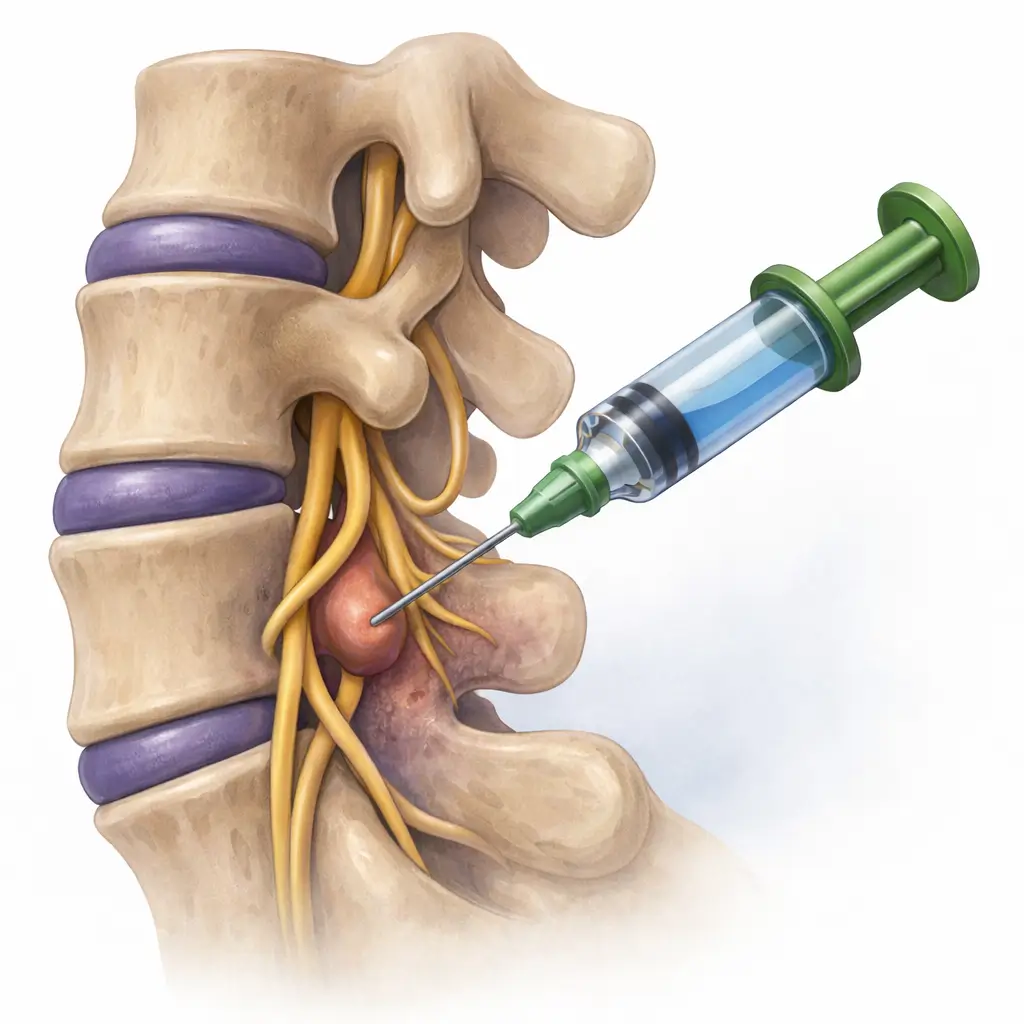
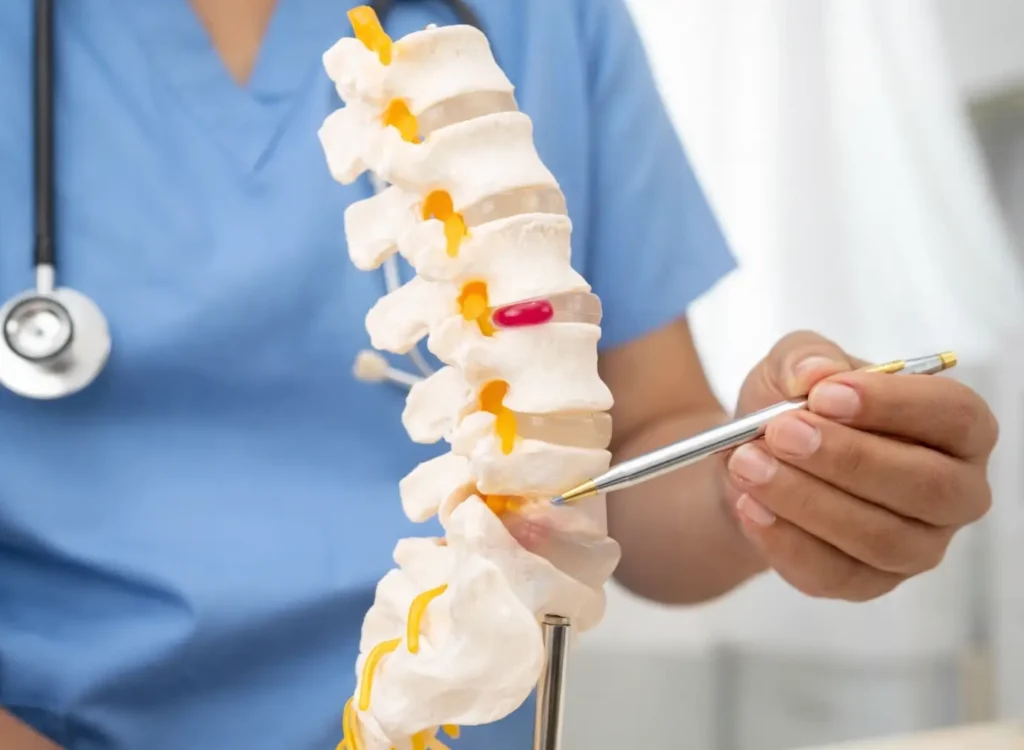
A medial branch block involves injecting medication near the small nerves in the spine that send signals from the facet joints. Rather than being injected directly into the joint, the medication is administered near these nerves along their course.
The injection typically contains a local anesthetic that temporarily numbs the nerve pathway. Medial branch block injections are most commonly used to determine whether pain originates from the facet joints in the neck or back. The aim is to pinpoint the exact source of the pain.
A lumbar medial branch block involves injecting medication near the medial branches of the lower back (lumbar spine), which transmit pain signals from the facet joints in that region.
A cervical medial branch block involves injecting near the medial branch nerves in the neck (cervical spine), close to the nerves that supply the facet joints.
A thoracic medial branch block involves injecting medication near the medial branches of the upper or middle back (thoracic spine), targeting the nerves associated with the facet joints in that area.
Medial branch block injection is typically done as an outpatient procedure with image guidance. Patients usually lie face down on a procedure table. The treatment area is disinfected, and a local anesthetic is used to numb the skin, improving comfort.
After that, a fine needle is carefully inserted toward the medial branch nerves, most often with X-ray (fluoroscopy) imaging to guide placement. A small dose of contrast dye may be used to confirm the needle’s correct position. Once confirmed, medication is delivered near the intended nerves. The procedure generally lasts around 20–30 minutes, and most patients can return home the same day.
The medial branch nerve block offers two primary benefits. First, it helps verify whether your pain stems from the facet joints in your spine by temporarily blocking the small medial branch nerves that transmit pain signals.
Second, they can help predict subsequent outcomes. If you find significant relief after the block, it often suggests you may be a good candidate for longer-lasting treatments like radiofrequency ablation.
Many patients experience immediate temporary pain relief after the injection, though the duration varies.
Most patients go home the same day after a medial branch block. You may feel soreness at the injection site, but it usually goes away quickly. It’s important to watch how your pain changes over the next few hours. Because the injection often contains a local anesthetic, you might notice significant pain relief for several hours. Some may experience relief for one or two days, while others may see little change. Overall, recovery time from a medial branch block is very brief.
We also ask that you track your pain levels and note which movements feel easier or remain difficult. This feedback helps determine if your facet joints are contributing to your pain. If you get significant relief after the injection, you could be a good candidate for radiofrequency ablation, a procedure designed to offer longer-lasting relief by blocking pain signals from the affected nerves.
At Painless Medical Practice, we take a medically driven approach to medial branch blocks. Your care is led by Jaroslav Tymouch, MD, the Founder of our clinic, and we ensure this procedure is appropriate for your case before proceeding. We create a deeply personalized treatment plan based on how you respond, not endless visits for quick relief.
If you’re looking for trusted pain management in Chicago, IL, we’ll explain the process in plain language and keep things efficient. Book an appointment to see if a medial branch block or facet injections make sense for your health.


A medial branch block is a minimally invasive diagnostic injection used to determine whether neck or back pain originates from the facet joints of the spine. Instead of injecting medication directly into the joint, a local anesthetic is placed near the medial branch nerves that transmit pain signals from the facet joints.
If the pain significantly decreases after the injection, it confirms that the facet joints are likely the source of discomfort. This information helps guide further treatment decisions.
The pain relief from a medial branch block is typically temporary. Because the injection usually contains a local anesthetic, relief may last several hours. In some cases, patients may experience improvement for a day or two.
The primary purpose of the procedure is diagnostic rather than long-term treatment. The duration of relief helps your provider determine whether you may benefit from longer-lasting procedures, such as radiofrequency ablation.
The next step after a medial branch block depends on how much pain relief you experience. Patients are usually asked to monitor their pain levels and note any improvement in movement or daily activities during the first several hours after the procedure.
If you experience significant temporary relief, you may be a strong candidate for radiofrequency ablation, a treatment that provides longer-lasting pain relief by disrupting the medial branch nerves. If relief is minimal, your provider may recommend additional diagnostic testing or alternative treatment options.

Most patients tolerate the procedure well. A local anesthetic is used to numb the skin before the injection, and the procedure is performed under imaging guidance for precision. Some mild pressure or temporary soreness at the injection site is possible, but serious discomfort is uncommon.
You may be a candidate if you have chronic back or neck pain that worsens with bending, twisting, or extension, especially when conservative treatments like physical therapy or medications have not provided sufficient relief. It is often recommended when facet joint arthritis or spinal degeneration is suspected.