Pain in the hip is discomfort felt in or around the hip joint, the area where your thigh bone connects to your pelvis. It’s one of the largest joints in the body, and you use it constantly. Because the hip carries so much of your weight, even mild pain there can mess with your daily life.
The tricky part is that hip pain doesn’t always mean the same spot for everyone. Some people feel it closer to the outside of the hip, while others feel it deeper in the joint area. It can also be hard to describe because the hip sits close to the lower back, groin, and upper thigh, and discomfort in that region can feel like it’s coming from more than one place.
Pain in the hip area is usually diagnosed by combining your story with an exam. We start by asking where you feel the pain, when it started, what makes it worse, and how it’s affecting walking, stairs, sleep, or daily activities. We also ask about past injuries and how active you are in daily life.
Next, we do a physical exam. We check for movement and strength, and look for signs pointing to the hip joint rather than nearby muscles or soft tissue. If we need a closer look, imaging may be recommended. X-rays can show joint and bone changes, while an MRI can help assess soft tissues, such as cartilage. Ultrasound can sometimes help check certain soft-tissue issues, and CT is used in specific cases when more detail is needed.
Over-the-counter or prescription options may be used for hip pain relief and inflammation.
A specialized physical therapy program can help the joint move with less stress.
Non-invasive options, such as shockwave therapy and laser therapy, may help with stubborn pain and irritated soft tissue, based on your case.
Steroid injections can calm inflammation in the joint or nearby structures and may make it easier to walk and perform daily activities.
Usually, it’s the last resort. If all conservative options failed or the joint problem is too advanced, surgery may be recommended through an appropriate specialist.
You can seek hip pain in Chicago, IL, whenever you feel ready. Some people wait until the pain is bad enough, but there’s no benefit to putting it off. A small issue today can turn into a bigger problem over time, especially if you just keep pushing through it and trying to walk it off.
It’s worth getting checked sooner if hip pain is starting to affect your daily life and usual activities, like walking, stairs, exercise, work, or sleep. Early care can often help you improve with simpler options and reduce the chance that you’ll need more advanced or invasive treatments later. Overall, the sooner you begin pain management in Chicago, IL, the better.
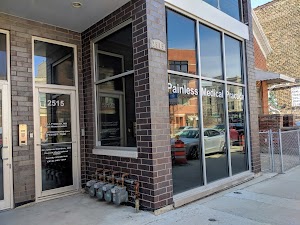
At Painless Medical Practice in Chicago, IL, we provide hip pain relief with a clear plan and a practical goal: help you move and feel better with as few sessions as reasonably possible. Our clinic is led by Jaroslav Tymouch, an experienced hip pain doctor, and we take time to find out what’s most likely causing your pain.
We use the latest, best-available equipment and case-appropriate options, including ultrasound-guided procedures and non-invasive therapies when they fit your situation. You’ll get a personalized plan based on your unique case and the length of time the pain has been present. We do not use generic solutions.
If hip pain is ruining your life, schedule an appointment in Chicago, IL. We’ll review your health and find out the best possible hip pain treatment.


Hip pain can be caused by several different conditions. Common causes include arthritis, bursitis, tendonitis, muscle strains, labral tears, hip impingement (FAI), and structural issues like hip dysplasia. Injuries such as fractures or dislocations can also lead to hip pain, especially after a fall or accident.
Overuse from sports, repetitive movements, or physically demanding work may also irritate the joint or surrounding tissues.

Hip pain can be felt in several areas depending on the underlying cause. Many people feel it deep in the groin area, while others experience pain on the outer hip, buttock, upper thigh, or even the lower back.
Because the hip joint sits close to multiple structures, it’s common for discomfort to feel like it’s coming from more than one place. A proper evaluation helps determine the true source.
How to relieve hip pain depends on the cause. Mild cases may improve with rest, activity modification, anti-inflammatory medications, and physical therapy. Strengthening and mobility exercises can help reduce joint stress.
For more persistent pain, treatment options may include injections, shockwave therapy, laser therapy, or other targeted interventions. Surgery is usually considered only when conservative treatments have not provided sufficient relief.
Minor muscle strains or mild irritation may improve with rest and reduced activity. However, joint-related conditions such as arthritis, labral tears, or impingement typically do not resolve on their own and may gradually worsen without proper care.
Hip pain can worsen at night due to inflammation, joint stiffness after inactivity, or pressure when lying on the painful side. Arthritis and bursitis are common causes of nighttime hip discomfort.